Monday, 1 February 2016

Film documentary notes

-Above the line

-Below the line


When to release a film?
-School holidays-films for younger audiences e.g. blockbusters
-Franchise movies have a release date in mind
-During 'quiet' times

Research audience-fill in questions about the movie, what to improve

-advertising
-producing
-promotions

-distributer needs to create a marketing campaign

-film trailer-important aspect of promotion
-teaser trailer
-theatrical trailer
-radio adverts
-TV adverts
-magazines
-billboards
-font-identifiable
-image-consistent globally
-poster-first look of the movie-has to show genre and intrigue the audience
-bus shelters
-buses
-film trailer normally-action/dialogue
-comedy-voice used in trailer
-drama/scary-voice/captions
-foreign language films-barrier is subtitles-trailer doesn't always show voices or anything to attract an audience
-TV spot-who's in it and when is it out-10/20/30 seconds

Multimedia
-website
-viral campaign/marketing
-publicity/PR/press-free editorial space
-reviews-effect decision to see film

tracking-how effective their campaign is

word of mouth-most effective way to get someone to watch a film

distributer will try and hold a word of mouth buzz before the movie is out
-free audience screenings

film success depends on film opening day
-always on a Friday
-Friday, Saturday, Sunday-3 day opening
-Monday-make or break

Exhibition
-multiplex-upgrades cinema experience
-good parking/access to a cinema is important in terms of location of cinema

Audience
-detailed analysis of customer base
-looks at location and plays films that will suit that area of location-create atmosphere for cinema

-tube stop/bus stop nearby?
-digital surround sound?
-parking?


Digital cinema
-3D-emmersive experience
-people always want to get away from here and do something
-cinema-social experience


Film piracy
-merging film industry
-British movie makers vulnerable
-piracy erodes revenue that goes back to the company
-easy to share files online with the advance in technology
-DVD sales help towards covering the cost of films

Merlin analysis

The scene is introduced with the non-diegetic melodic music of Downton Abbey's theme tune, signifying time has passed. We hear footsteps as Daisy's torso, hips and arms carrying a silver tray of food, briskly walk across the long mid shot of Mrs Patmore sitting down with a cup of tea.The dialogue between Mrs Patmore and Daisy reminds me of a mother speaking to her daughter. Daisy is very whimsical, light and airy which fits the traits of a typical young girl. Mrs Patmore on the other hand contrasts with Daisy. Daisy is taller, and more slender and significantly younger. Mrs Patmore's form is portrayed as quite strong and her demeanour is quite masculine. However we see the softer to side of Mrs Patmore, and her tense, cold muscular form and sour face transforms into warmth as you see Mrs Patmore relax and try to console Daisy. Mrs Patmore's figure is presumably due more to her age as, stereotypically, the young care more about their looks than the older. We see that even though Daisy is the lowest in the house's heir achy, she still cares about her appearance. She is not being starved as we can see Mrs Patmore is well fed, so her slender shape is a matter of preference. Women then, and now have to conform to standards such as how slim you are. Although we know from looking at Daisy's work clothes that she is not rich or noble, she still takes pride in her appearance. Her work clothes are worn in, bland and neutral but she still keeps herself neat and tidy, with her hair pinned back, shirt tucked in and her skirt - a sensible length.

Amongst the scuffle and clanging of pots and pans, Daisy begins the dialogue. The scene starts with Daisy thinking out loud to Mrs Patmore about Thomas and how 'attractive' she finds him. Mrs Patmore tries to convince Daisy she's lusting over the wrong boy, which Daisy takes personally, thinking she's not good enough for Thomas. We see a combination of long wide shots of Daisy cleaning, to medium close ups of Mrs Patmore, and over the Mrs' Patmore's shoulder shots at Daisy, or medium close ups of Daisy and a pan shot of Daisy moving closer to Mrs Patmore; all of which emphasises the confusion in their conversation but also how willing and comfortable they are to talk to one another, evidenced by Daisy boldly starting the conversation. I believe that it is mainly their gender that allows them to be this comfortable around each other. Daisy must presume that Mrs Patmore has some courting advice for Daisy since they are both women and stereotypically should be with men.

Mrs Patmore, realising she's offended Daisy, re-words herself, telling her he's not the boy for her, and emphasising she's not the GIRL for him. Here we see Mrs Patmore hint at Thomas' homosexuality, however poor naive Daisy doesn't catch on, and continues to put herself down, saying she's done nothing with her life. Her lack of confidence and low self esteem reflects the unbalanced values of women against men back then, and how she believes her only job is to attract a man and if she can't do that then she is a failure.
Evidently, Mrs Patmore knows more about Thomas- saying he's "seen and done more than is good for him", to which Daisy gives her a puzzled look. Mrs Patmore re-emphasises "he's not a ladies' man", again suggesting he likes men, which Daisy translates to- he's not a womaniser. Mrs Patmore, in frustration with a raised voice expresses her opinion of Thomas, saying he's "a troubled soul". The negative connotations of "troubled soul" lead us to believe Mrs Patmore is homophobic, however this is the norm in the period drama, and fits with the era as this time period was not advance with gender identity. If Daisy's confusion before wasn't clear enough, it is now, as she blurts out "I don't know what you mean, Mrs Patmore". Mrs Patmore, not wanting to crush Daisy's heart, leaves her in ignorant bliss by shaking her head and telling her she "don't mean anything". Mrs Patmore conveys a warmth that only a woman could bring and advice only a woman (back then) could give.

This scene takes place in quite a natural looking and old kitchen, but neutral and bland to portray that the servants courters are only seen by them and so are practical not aesthetically pleasing. The gender neutral colours would appeal to the large number of male and female servants living downstairs. As for props, the food that is out on the table is also not very appetising to match the mood of the room, suggesting that they are not in "peak" dining hour and have some downtime in which they can talk and tidy their work space. It also reminds us that the show is set in the past and so there would be no refrigeration. The scene is introduced with the non-diegetic melodic music of Downton Abbey's theme tune, signifying time has passed. We hear footsteps as Daisy's torso, hips and arms carrying a silver tray of food, briskly walk across the long mid shot of Mrs Patmore sitting down with a cup of tea.The dialogue between Mrs Patmore and Daisy reminds me of a mother speaking to her daughter. Daisy is very whimsical, light and airy which fits the traits of a typical young girl. Mrs Patmore on the other hand contrasts with Daisy. Daisy is taller, and more slender and significantly younger. Mrs Patmore's form is portrayed as quite strong and her demeanour is quite masculine. However we see the softer to side of Mrs Patmore, and her tense, cold muscular form and sour face transforms into warmth as you see Mrs Patmore relax and try to console Daisy. Mrs Patmore's figure is presumably due more to her age as, stereotypically, the young care more about their looks than the older. We see that even though Daisy is the lowest in the house's heir achy, she still cares about her appearance. She is not being starved as we can see Mrs Patmore is well fed, so her slender shape is a matter of preference. Women then, and now have to conform to standards such as how slim you are. Although we know from looking at Daisy's work clothes that she is not rich or noble, she still takes pride in her appearance. Her work clothes are worn in, bland and neutral but she still keeps herself neat and tidy, with her hair pinned back, shirt tucked in and her skirt - a sensible length.

Amongst the scuffle and clanging of pots and pans, Daisy begins the dialogue. The scene starts with Daisy thinking out loud to Mrs Patmore about Thomas and how 'attractive' she finds him. Mrs Patmore tries to convince Daisy she's lusting over the wrong boy, which Daisy takes personally, thinking she's not good enough for Thomas. We see a combination of long wide shots of Daisy cleaning, to medium close ups of Mrs Patmore, and over the Mrs' Patmore's shoulder shots at Daisy, or medium close ups of Daisy and a pan shot of Daisy moving closer to Mrs Patmore; all of which emphasises the confusion in their conversation but also how willing and comfortable they are to talk to one another, evidenced by Daisy boldly starting the conversation. I believe that it is mainly their gender that allows them to be this comfortable around each other. Daisy must presume that Mrs Patmore has some courting advice for Daisy since they are both women and stereotypically should be with men. Mrs Patmore, realising she's offended Daisy, re-words herself, telling her he's not the boy for her, and emphasising she's not the GIRL for him. Here we see Mrs Patmore hint at Thomas' homosexuality, however poor naive Daisy doesn't catch on, and continues to put herself down, saying she's done nothing with her life. Her lack of confidence and low self esteem reflects the unbalanced values of women against men back then, and how she believes her only job is to attract a man and if she can't do that then she is a failure.
Evidently, Mrs Patmore knows more about Thomas- saying he's "seen and done more than is good for him", to which Daisy gives her a puzzled look. Mrs Patmore re-emphasises "he's not a ladies' man", again suggesting he likes men, which Daisy translates to- he's not a womaniser. Mrs Patmore, in frustration with a raised voice expresses her opinion of Thomas, saying he's "a troubled soul". The negative connotations of "troubled soul" lead us to believe Mrs Patmore is homophobic, however this is the norm in the period drama, and fits with the era as this time period was not advance with gender identity. If Daisy's confusion before wasn't clear enough, it is now, as she blurts out "I don't know what you mean, Mrs Patmore". Mrs Patmore, not wanting to crush Daisy's heart, leaves her in ignorant bliss by shaking her head and telling her she "don't mean anything". Mrs Patmore conveys a warmth that only a woman could bring and advice only a woman (back then) could give.

This scene takes place in quite a natural looking and old kitchen, but neutral and bland to portray that the servants courters are only seen by them and so are practical not aesthetically pleasing. The gender neutral colours would appeal to the large number of male and female servants living downstairs. As for props, the food that is out on the table is also not very appetising to match the mood of the room, suggesting that they are not in "peak" dining hour and have some downtime in which they can talk and tidy their work space. It also reminds us that the show is set in the past and so there would be no refrigeration.

Monday, 14 December 2015

Class and status representation

The groups into which people are divided as a result of socio-economic inequality. People in class strata share a similar economic situation such as occupation, income and ownership of wealth.

The divisions between the social classes however are quite vague e.g. where the working class end and the middle class begin.

The social class system is regarded as MERITOCRATIC. i.e. where social position is achieved by merit rather than ASCRIBED by birth. However the social class you are born into can have an impact on life chance and therefore movement into a higher class group is minimised. The upper classes in the UK achieve their position via inherited wealth, thus the majority of citizens could never hope to achieve upper class status.


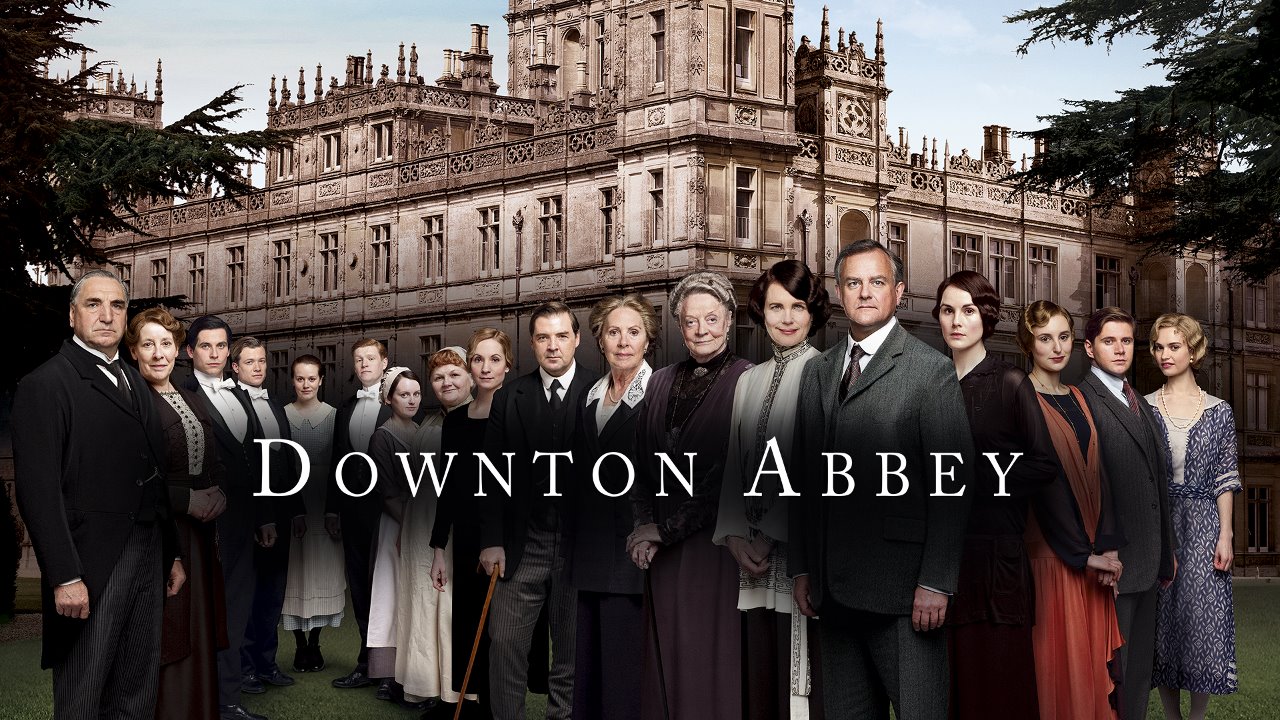
Upper classes (e.g Downton Abbey) - often shown as rich, clever, snobby, very posh. Their wealth is often inherited, ascribed status. They are owners of "the means of production" e.g. land-owners, tilted gentry, aristocracy.

The lives of royalty and the jet setting lifestyle of the rich are portrayed as a glamorous world we can only dream about e.g. Represented in the likes of Hello/Ok etc. This image is contrasted by the use of the upper classes as a source of comedy, the working / middle classes poking fun at their lifestyle, the champagne swigging/polo playing set, the butt of many a joke e.g; They Think It’s all Over. This is often used to set this class apart, as most of us will never enter into this world, therefore ridicule overrides aspiration.


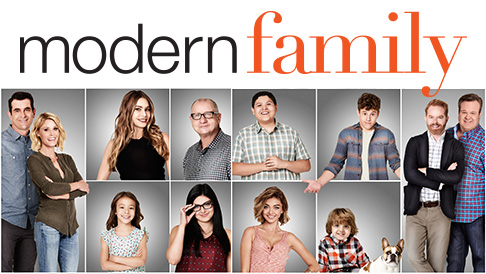
Middle classes (e.g.  Modern Family) - often shown as "normal", good family values, well behaved. Those in skilled non-manual and professional occupations (white collar workers). Middle class may be ascribed or achieved.

Images of the comfortable, white, middle class nuclear family is one of the most common images in the media e.g. advertising, sit com such as Modern Family. By accumulation we therefore associate this with the ‘norm’.

Middle class deviance e.g. racism, crimes such as insider share dealing/tax evasion is often ignored or presented in less hostile terms than working class crime.


Working classes (e.g. The Middle) - often shown as poorer, less happy, less intelligent, but with strong community links. Manual occupations, both skilled and unskilled.

There are many mixed messages about working class life and sub-cultures. On the one hand many ads give a solid, romanticised view, often equated with the North e.g. Hovis/Warburtons/Boddingtons. Characters tend to be associated with qualities we admire e.g. ‘the jack the lad’, the straight talking, quick witted woman etc. On the other hand the working class can be portrayed as course, prone to violence and crime and party to all manner of social problems.


Lower classes (e.g.) - often shown as being criminals, no family values, no community links, bad parents etc. Excluded groups, usually due to poverty and lack of employment. Often presented by the media as deviant – addicts/spongers etc.

The media tend to reinforce the popular prejudice that the poor are work-shy spongers living off the Government, some successful products have used this successfully e.g The Royle family. These stereotypes have a long history extending back to the Victorian era, where novels and images represented the underclass as a danger to society and its moral fibre.


You may notice that in many tv shows, people of different classes don't mix. And when they are shown together, they are often shown as clashing and being very different.


What to Consider
  • Can I identify what class characters are?
  • Are people from different classes shown as having different interests, personalities, attitudes, behaviours?
  • If so, how?• Is their class represented as being important in their life?
  • Are people from particular classes portrayed as being better, more powerful, than others?
  • Are people from particular classes portrayed as being abnormal /weaker/ more pathetic than others?
  • How do other characters in the clip treat the characters from different classes?
  • What is the message the clip is trying to portray about class?


Thursday, 10 December 2015

Editing of my British Study Case


ACTION MATCH
When following a single character (e.g. Paddington clinging to toilet system and it beginning to fall, which is continued in the next shot from a different angle) this is a purely technical device.

However, when an action match is used for intercutting, it can heighten the parallels/contrasts between two different characters in two different situations and offers an opportunity for juxtaposition.


EYELINE MATCH
Eyeline match usually provides insight to a character's private thoughts.

e.g In Paddington, Paddington is using the London Underground. He feels nervous, emulated by him glancing down at the escalator. Camera cuts to a high angle shot of the descending escalator from Paddington's point of view. This is an eyeliner match as Paddington looks at something, and the the audience see what he's looking at. After this we see Paddington look up. The camera cuts to a high angle shot of a sign saying "Dogs must be carried"- again another eyeliner match, however it portrays a different atmosphere due to the low angle shot emulating Paddington's glimmer of hope at conquering the London underground.


FINAL SHOT
In any scene, which character or characters are shown in the final shot of the sequence? This is often the character with which the audience is expected to identify.

e.g in Paddington, we see Paddington put his ticket in the gateway, but it closes before he has a chance to walk through. The audience, particularly Londoners will relate to this. This is the final shot as not only is it relatable and leaves the audience laughing but also involves only the main character.


INTERCUTTING: JUXTAPOSITION
Although typically a narrative device, intercutting can set up juxtaposition between parallel storylines, exaggerating the impact or meaning of each by highlighting a point of difference e.g. in East Enders: Wedding Night, the warmth, light and music of the happy pre-wedding feast is in stark contrast with the two unhappy families represented in the cold and dark whenever we cut away. This provides a more favourable representation of Asian family life over white Londoners.


INTERCUTTING: TENSION
When intercutting is used to draw two storylines together, this can be structured to create tension, and therefore heighten the audience’s identification with a particular character.

e.g.: in Primeval, intercutting between the tiger’s pursuit of Cutter and Abby’s running in with the rifle is action code and prompts the question: will she get there in time? In Hotel Babylon, intercutting offers both tension and juxtaposition: just as Adam is saving his colleague’s life with a jar of jam, another African immigrant, Ibrahim, is being lost. The tension and juxtaposition lead the audience to identify with both characters.

gif here of paddington

JUMP CUTS
These are rarely used in TV or film; when they are, they tend to suggest either a) chaos and disorder, b) self-conscious ellipsis (drawing attention to the rapid pace of the action) or c) a director who likes to break the rules!

e.g. in Primeval, two jump cuts accelerate Cutter’s preparation to slide down the zip-wire; this could be read as speedy and decisive.

gif here of paddington


MOTIVATION
A motivated edit is any transition forced on the editor by the development of the action, narrative or character. Whenever shot (a) refers to the existence of an event outside the frame, and we then cut to (b) which shows that event, that’s a motivated edit. We can sometimes judge a character’s worth or importance by the number of cuts they motivate.

e.g. in Primeval, Cutter runs away from the tiger, drawing it away from Abby.

His constant motion motivates many of the cuts in this sequence, again reinforcing his status as the protagonist, if not the Proppian hero.

gif here of paddington


PACE OF EDITING
This can imply character qualities, especially if only one or two characters are in the sequence. A fast pace might suggest energy or panic (depending on context) while infrequent cuts (long takes) might suggest calm, a casual attitude, or provide documentary-style realism (as in Cast Offs). Similar effects can be achieved with speed ramping and slow-motion.


BRIDGING SHOT
a shot (cut) used to cover a break in time, or other break in continuity.
A shot used to cover a jump in time or place or other discontinuity. Examples are the falling calendar pages, railroad wheels, newspaper headlines, and seasonal changes.


PREVALENCE
How much screen time does a character get? The more time we see them on screen, the more important their role. This can develop during a scene to change character’s status.

e.g. in Hotel Babylon, Adam is invisible (‘just one of many refugees’) until he steps forward to treat the diabetic maid. Suddenly, the editing favours him, and we realise his importance and skill, despite his menial status in the hotel.

gif here of paddington

SELECTION: to show or not to show
As film-makers yourselves, it can sometimes be interesting to ask what information has been included or omitted in an edit.

e.g. in Primeval, as Jenny comes under increased threat from West, at no point do we cut away to her colleagues approaching the barn. To do so might have reduced the tension in the scene; not doing so arguably increases Jenny’s apparent vulnerability. Narratively, it is also a nice surprise when the team arrive in a single cut, which contrasts with the early tiger chase (see intercutting).

gif here of paddington

SHOT / REVERSE SHOTS and REACTION SHOTS
S/RS indicates the relationship between two characters: it signifies and sometimes exaggerates their closeness or their opposition (depending on the context). The amount of time given to a character’s reaction shots can convey their status in the scene. For example, if two characters are in S/RS conversation, do they get equal screen time, or do we spend more time looking at one character, speaking and reacting? Equally (though this is also a function of camera, are the two characters framed equally?

e.g.: in Doctor Who, the S/RS between Martha and the Master gives Martha CUs and the Master MCUs, conveying Martha’s greater status as a character, even if narratively she appears defeated.

gif here of paddington

Due Monday 14th December

To do:
Re- write your doc who clip - use the two documents attached to help- try to use all of the points on the sheets and pay careful attention to editing.

Finish - editing terms and youtube examples - these will be shown in our next lesson. Monday 
don't know what this is? ^

Synergy and Convergence

Synergy definition:
Term used to describe a situation where different entities cooperate advantageously for a final outcome.

Relating this to Media Studies:
The simultaneous release of products which promote each other. It is synchronising and actively forging connections between related and directly related areas of the film.

Examples of synergy:

Wednesday, 2 December 2015

Cinderella: film promo research

Name of Film:
Cinderella (2015)

Film Rights (franchise, sequel, book etc):
Cinderella is a classic fairytale, originally adapted from Charles Perrault's "Cendrillon". However, this film in particular is heavily based on Disney's 1950's animated classic, Cinderella. Both include the same songs.

Film Budget:
$95 million

Production Company (Warner Bros, Film Four etc):
Walt Disney Pictures

Director (plus other films they’ve made):
Kenneth Branagh directed Cinderella. He has also directed 2011's "Thor", 2014's "Jack Ryan: Shadow Recruit" as well as many Shakespearan film adaptations (Hamlet, Much ado about nothing, Henry V Jack Ryan: Shadow Recruit

Main Star 1 (Plus other films):
Lily James plays the title character. She also played "Korrina" in "Wrath of the Titans"; "Older skunk" in 2012's "Broken" and "Lisa Temple" in "Fast girls" but it is her role in the hit UK period drama, Downton Abbey for over 2 seasons (21 episodes) that has made her a well known star.

Main Star 2 (Plus other films):
Cate Blanchett played Lady Tremaine (Cinderella's stepmother.) She is most well recognised as portraying Galadriel in The Lord of the Rings trilogy, and The Hobbit trilogy. Another film she starred in was 2008's "The Curious Case of Benjamin Button", playing "Daisy"; and "Marissa Wiegler" in 2011's "Hanna".

Brief Storyline:
When her father unexpectedly passes away, young Ella finds herself at the mercy of her cruel stepmother and her scheming step-sisters. Never one to give up hope, Ella's fortunes begin to change after meeting a dashing stranger. A live action retelling of the 1950's Disney animated classic.

Production Details (where was it filmed? animation? special effects? etc:
The majority of the film is shot in England, ranging from: London colleges, Pinewood studios, and rural areas in Oxfordshire.The film includes CGI mice, carriage and glass slippers, as well as many digital enhancements on her dress. Many of the locations facades feature CGI to create a fairytale "kingdom".

Release date:
Cinderella was released on the 13th of March in the USA, and the 27th in the UK, 2015. Cinderella was released worldwide between February 13th and the 27th of March, with the exception of Japan on the 25th of April.

How wide was its release?

Two other films released the same week:
In the US, according to "Movie insider", "Home Sweet Hell" starring Katherine Heigl and "Run all night" starring Liam Neeson were released in the same week as Cinderella. In the UK, "Spongebob movie: Sponge out of water" and "Home" (both aimed at the Cinderella's target market) came out in the same week.


Main Competitor film (released around the same month):
"Home" would have been the biggest competator as Dreamworks brought out an animated, family film which Disney is known for doing. "Home" is also more gender neutral. "Insurgent" may have been a competitor as teens are torn between seeing a futuristic, dystopian franchise or a retelling of a classic princess.

Target audience for the films:
Families with children of 5-12 years old, predominantly young girls.

What are the films main selling points?
It has a well known storyline based on a classic fairytale so the film will gain support from those who like the original story. Furthermore, parents are more likely to take children as they know what to expect. The main selling points are the CGI, the character development and world building.

Example of Promotion 1 - give details
World premiere on February 13th at the 65th Berlin International Film Festival.  At events such as D23, and CinemaCon, previews and presentations were given.

Example of Promotion 2 - give details
Before the film, Frozen Fever, a Walt Disney Animation Studio's short, is shown. The inclusion of this film after the trailers enticed more to the cinema, as it appealed to the current Frozen fanbase.

Example of Promotion 3 - give details
A teaser trailer debuted on May 15, 2014 which doesn't include any footage from the film, just a sparkling glass slipper slowly revealed. The trailer debuted on November 19, containing actual footage and was viewed 4.2 million times in the first day on YouTube -  the highest views among all Disney films in history.

How large was the marketing strategy?
There was a London premiere in Leicester square's Odeon as well as an exhibition on the film just opposite which showcased the props and costumes, as well as selling new Cinderella official toys. There are masses of interviews with the cast, online written and filmed; and TV appearances.


Are there examples of the following:

  • Toys
  • Website
  • Social Media
  • Video Game - only online free games available
  • Fast Food Merchandise - the quality of the march would be sufficiently low and tarnish the high quality film's identity, so no.
  • High Profile Premiere
  • Tv Appearances
  • News Reports

Toys include dolls, fancy dress as well as general merchandise like tshirts, bags, mugs, notebooks, pjs and phone cases. The website refers to a page on Disney's movie site.
The cast and studio interact with their audience via social media.

What do you consider the aim of the campaign to be (to be entertaining, exciting, cool, interactive, build on prior success, be totally unique, build on star success, Create a brand etc):
The aim of the campaign was initially be exciting and build suspense, hence the black posters featuring only a glass slipper, and a teaser trailer with said slipper rotating and a butterfly landing on it. As the merchandise released prior to the films release, the public grew more excited for its release. However, once the official trailers with film footage landed/the film released, their campaign diverted as they aimed to build on the prior success of Disney's 1950's animated Cinderella.